

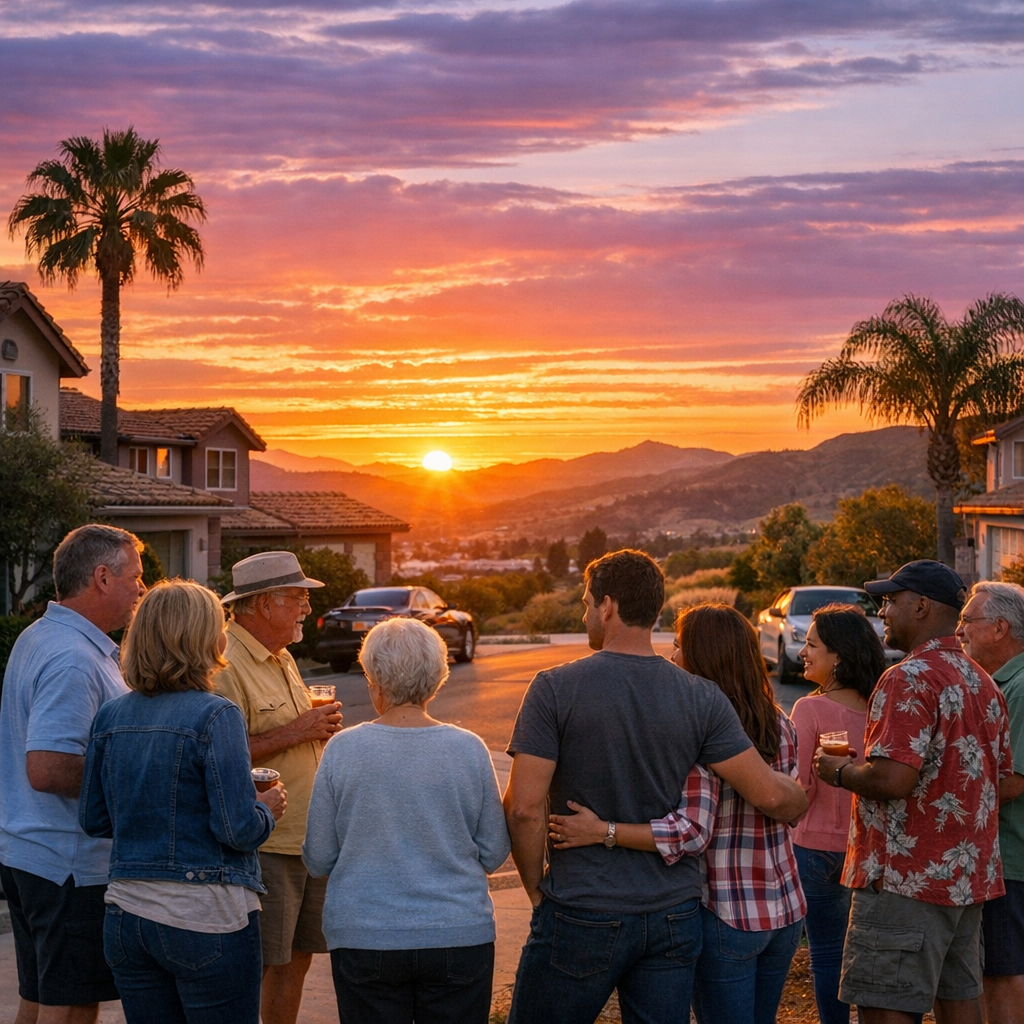
Santa Clarita is more than a place on the map—it’s a tapestry woven by its residents, one that balances growth and familiarity, optimism and concern. Through conversations with long-time neighbors, recent arrivals, parents, youth, and older adults, I’ve gathered perspectives that show how people here feel rooted, hopeful, and sometimes torn between promise and pressure.
Growing with Pride—and Questions
Many here remember when the Valley’s neighborhoods were smaller, slower, more connected. Others moved in later, drawn by the promise of homes, parks, and good schools. Several long-time residents say that Santa Clarita still carries its original hometown feel: block parties, friendly waves, shared barbeques in backyards. “It’s a place where you know your mail carrier, your barista, your city councilmember,” one neighbor reflected.
At the same time, people are asking: as we expand, where does the sense of belonging go? With new housing tracts, traffic snarls, more shopping centers—some feel the city’s character is shifting, becoming more auto-oriented, less intimate. Parents worry about funding for schools, youth want more safe spaces to gather, and older adults sometimes say they feel less visible in public planning conversations.
Voices from the Edges and the Center
From First-Time Homeowners
“We moved here because of the space—room for our kids to play, room for our dreams,” a family in Canyon Country shared. They love the trails, the schools, the quiet—but also mention long commutes or the lack of places to walk for errands. They say things that feel small elsewhere become big here: a lack of benches along paseos, minimal late-night transit, sometimes few options when schools need experienced substitute teachers.
From Lifelong Residents
Then there are people like Marsha, who’s lived in the Valley since the early ’70s. She watches the city grow—and worries what might be lost: community gardens replaced by pavement, small shops overtaken by chains, friendships stretched by commute times. Yet, she volunteers because she still believes in what neighbors can build together—those shared efforts at clean-ups, beautification, art festivals, moments that say: we care.
Places Where We Feel Heard—and Others Where We Yearn for More
There have been real wins. Most residents (>60%) are active in city programs—volunteering, participating in community arts, showing up to neighborhood meetings. The city’s recent work updating the Arts Master Plan involved broad engagement: surveys, focus groups, vision sessions. Those who took part say it felt rare to feel heard by policies that shape how our parks, walls, murals, and performance spaces look and feel.
Yet, not everyone experiences these outreach efforts equally. In some neighborhoods—especially newer tracts or areas with more rental housing—residents report fewer invitations to join in, fewer communication channels that reach them, and sometimes uncertainty about how to influence decisions. Others speak of language barriers or feeling that city meetings bleed into dense schedules making them hard to attend.
Belonging Means Inclusion at All Levels
Belonging isn’t just about being physically here—it’s about being recognized, considered, and included. It’s about seeing art that reflects your culture, festivals that include your traditions, meetings held at times and places accessible to working people, seniors, parents, and youth alike.
Many residents believe we don’t always need more buildings or amenities—sometimes, we need better connections. More shade on sidewalks. More benches in parks. More volunteer interpreters. More outreach in places beyond city hall. These bridge the gap between “us” and “them” and make “community” feel real.
Why Listening Matters—and How We All Can Help
When folks are engaged—when they feel heard—they’re more likely to volunteer, to watch out for neighbors, to show up. That builds trust and stronger neighborhoods. And Santa Clarita has shown it’s capable of this: through local beautification projects, arts programming, participating in long-term plans. But maintaining that means shared effort.
Some ideas people offered:
- Neighborhood round-tables in accessible locations outside downtown.
- More multilingual materials and child-care during meetings so parents can attend.
- Supporting youth leadership councils so young people shape their spaces.
- Regular arts and culture events across all neighborhoods—not just the “main” corridors.
Belonging doesn’t require perfect plans. It requires community: the messy, joyful, effortful work of being seen, of listening, and choosing to act together. In Santa Clarita, I see the promise. And I believe we’re more powerful than each of us alone.