

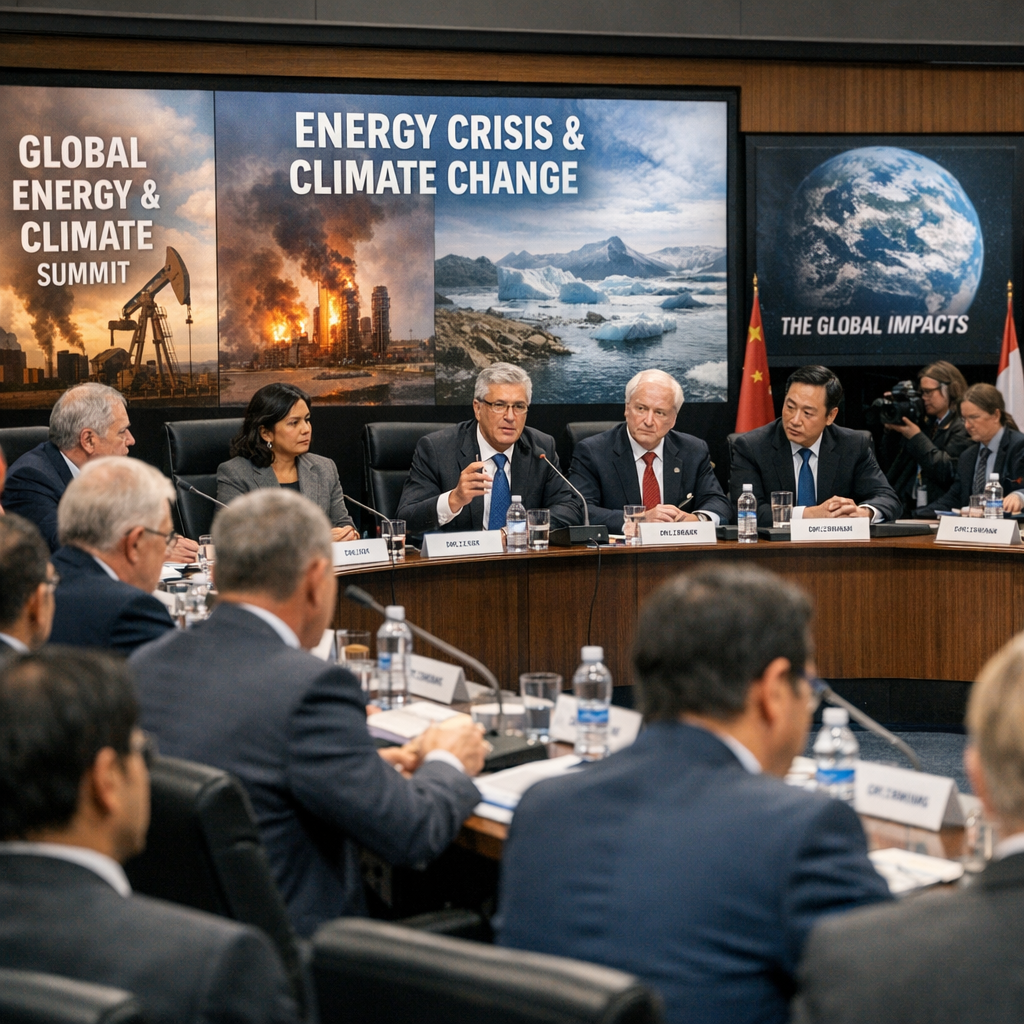
The global economy is currently navigating a complex landscape shaped by energy crises and the escalating impacts of climate change. These intertwined challenges are influencing economic growth, inflation rates, and international trade dynamics.
Energy Crises and Economic Impacts
Recent geopolitical tensions, particularly in the Middle East, have led to disruptions in oil exports, resulting in rising commodity prices and inflationary pressures. The Organization for Economic Co-operation and Development (OECD) projects global growth to slow to 2.8% in 2026, with inflation expected to reach around 4.5% globally. The United States, however, demonstrates relative resilience due to strong domestic energy production and investments in artificial intelligence, defense, and energy sectors, supporting a projected GDP growth of 2.1%.
Climate Change and Economic Vulnerabilities
Climate change poses additional risks to global economic stability. Studies indicate that anthropogenic climate change has reduced global agricultural total factor productivity by about 21% since 1961, equivalent to losing the last nine years of productivity growth. This impact is more severe in warmer regions, such as Africa and Latin America, where reductions reach approximately 30-33%. The economic consequences of climate change are highly uncertain, with both climate sensitivity and economic damage per degree of warming playing significant roles.
Policy Responses and Future Outlook
Addressing these challenges requires coordinated policy responses. The OECD emphasizes the need for targeted and temporary fiscal support to mitigate the effects of energy supply disruptions, particularly for vulnerable households and small businesses. Additionally, diversifying energy supply sources and improving energy efficiency are crucial to reducing vulnerabilities to future shocks. In the context of climate change, investing in sustainable technologies and enhancing adaptive capacities can help mitigate economic risks.
As the global community confronts these multifaceted challenges, understanding the interplay between energy crises and climate change is essential for developing effective strategies to promote economic resilience and sustainable growth.